
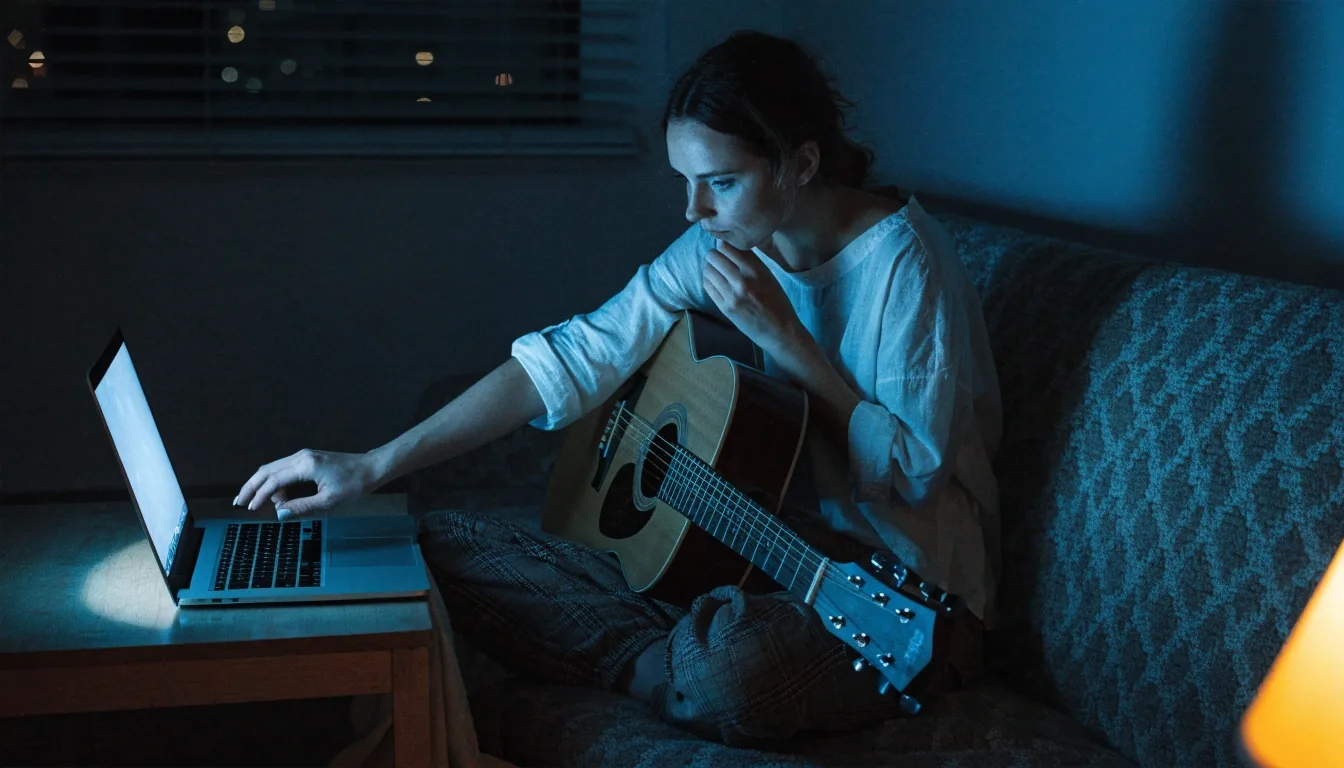
Live Online Guitar Lessons Across the UK
Live online lessons are one-to-one guitar tuition through a video call, and they run the same way as a session in the room. The studio teaches learners in Manchester, Edinburgh, Brighton, and anywhere else with a stable connection, plus anyone in London who would rather not travel.
Where online lessons help most in the UK
UK guitar tuition is concentrated in cities with a deep tutor market, and thinner everywhere else. Learners in Manchester, Edinburgh, and Brighton have real choice locally, while smaller towns often have one or two listings. Online lessons remove that gap entirely: the teacher is not chosen by postcode.
It also helps shift workers and parents who cannot commit to a fixed weekly trip. The lesson is the same whether you are twenty minutes or two hundred miles away.
Distance stops being part of the decision. What is left to weigh is your week, your goals, and how much time you can put in between lessons.
How a live online lesson actually runs
You join a video call at an agreed time and the lesson proceeds as normal: warm-up, work on the current material, then a plan for the week. The teacher demonstrates on camera and asks you to play back so timing and note accuracy get checked. Screen sharing is used for tabs, notation, and backing tracks when useful. It is a real lesson with real feedback, not a recorded course you watch alone. The main constraint is that hands-on correction becomes verbal, so descriptions get more precise.
Join the call and warm up on something you can already play
A few minutes to settle hands and timing before the work starts
Work the current piece or exercise, teacher demonstrating on camera
Tabs, notation, or a backing track shared on screen when useful
Play it back so timing and note accuracy get an honest check
Corrections arrive as clear spoken direction rather than hands on
Leave with a short plan for the week you can actually keep
What to practise, how slowly, and what to bring back next time
Which format suits the goal
In the studio, in London
The teacher can take your fretting hand, reposition it, and hand the instrument back. Useful for posture questions, first chords, and anything where the correction is easier shown than described.
Best when you are close enough to travel to 27 Denmark Street regularly and want the physical back and forth.
From your own room
Anyone in the UK with a stable connection can book the same teacher, without losing an evening to the journey. Screen sharing makes notation, tabs and transcriptions easier to read side by side than a paper copy across a room.
Best when you play electric or acoustic regularly, can commit to a fixed slot, and would rather not travel midweek.
Plenty of students split the two: a Monday video call for the technical work, a studio session once a month when they want hands on the instrument.
What you need before the first online lesson
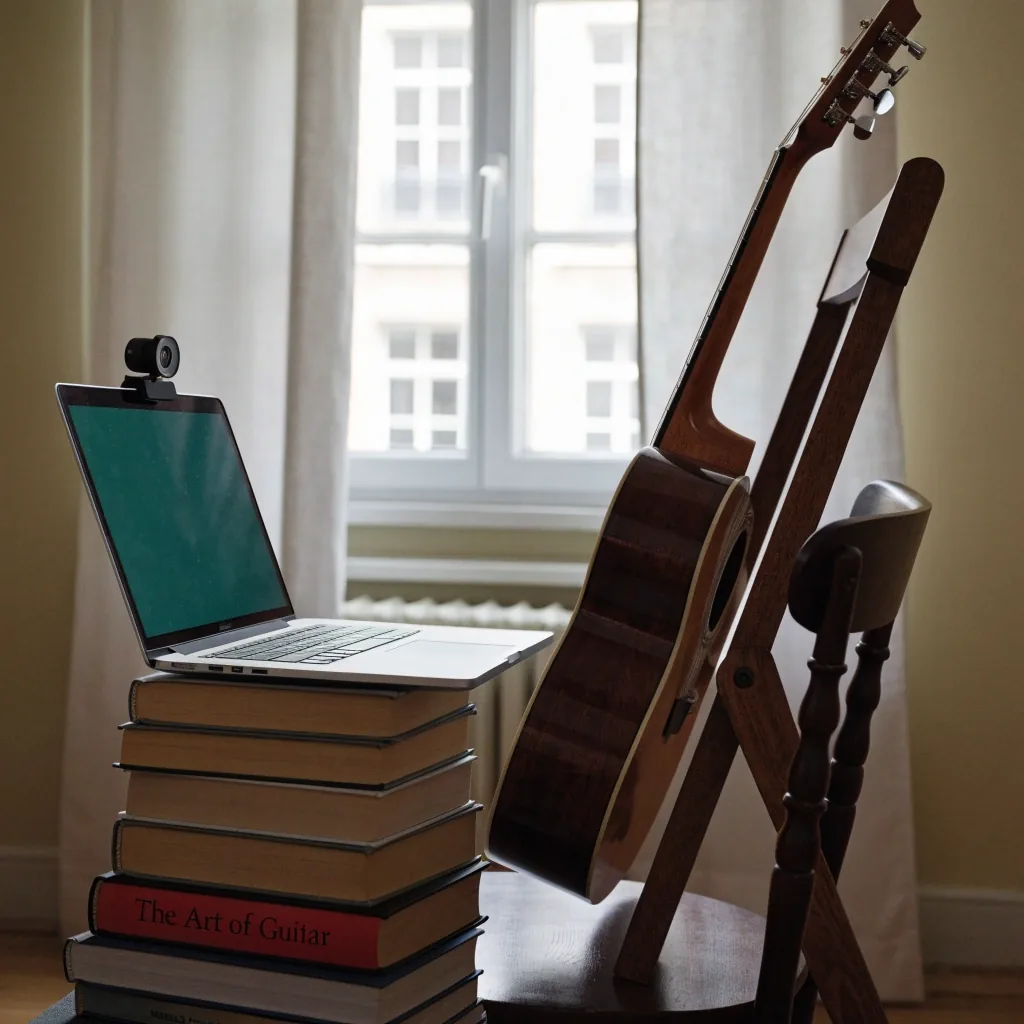
A guitar, a device with a working camera and microphone, and a space where you can sit and play without being interrupted. Headphones help but are not essential. A phone is workable for the first few lessons, though a laptop or tablet makes tabs easier to read on screen. You do not need specialist software, a mixer, or an audio interface to begin. A tuner app and a stable connection cover almost everything.
Acoustic, electric or classical, in standard tuning. A working instrument with strings that hold pitch matters more than the price of the guitar.
A laptop, tablet or phone you already own is enough. Built-in speakers and mic work fine for the first few lessons; headphones are a comfort, not a requirement.
Wired or solid home Wi-Fi. If the connection drops mid-lesson, you pick up where the lesson stopped rather than losing the slot.
A room where you will not be interrupted. A tuner app on your phone covers the rest; nothing else has to be bought to start.
Sound and camera setup that helps
Frame your hands, not your face
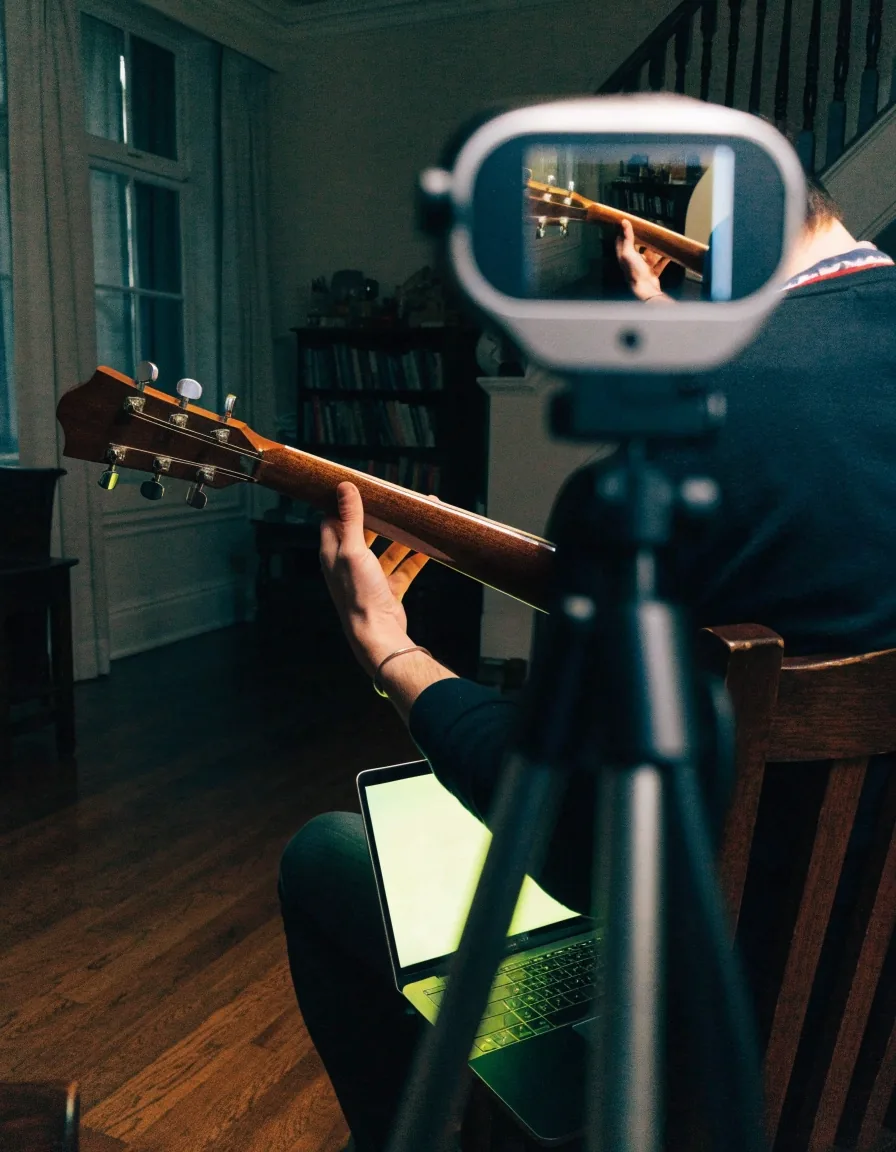
Point the camera so your hands are visible, ideally from the side you play with, and sit far enough back that the whole guitar is in frame. That single adjustment does more for a lesson than any upgrade to your equipment.
Angle the mic at the guitar
Position your microphone, or the device you are using, so it captures the instrument rather than the room's echo. Playing near a soft furnishing beats playing in a bare room with hard floors.
Light on the fretboard
A little attention to lighting helps more than expensive gear. A lamp behind the camera rather than behind you keeps the neck readable on screen. Most students have a workable setup by the second session without buying anything.
Online lessons for beginners, and for players who are stuck
Starting from nothing
Starting online as a complete beginner works, and it removes the travel barrier that stops a lot of people ever beginning. Early lessons focus on posture, a small set of chords, and playing in time, exactly as they would in person.
The teacher will ask you to angle the camera at your fretting hand more often than a face-to-face lesson would. If you are genuinely unsure, book a short session and treat it as a test.
When something specific is stuck
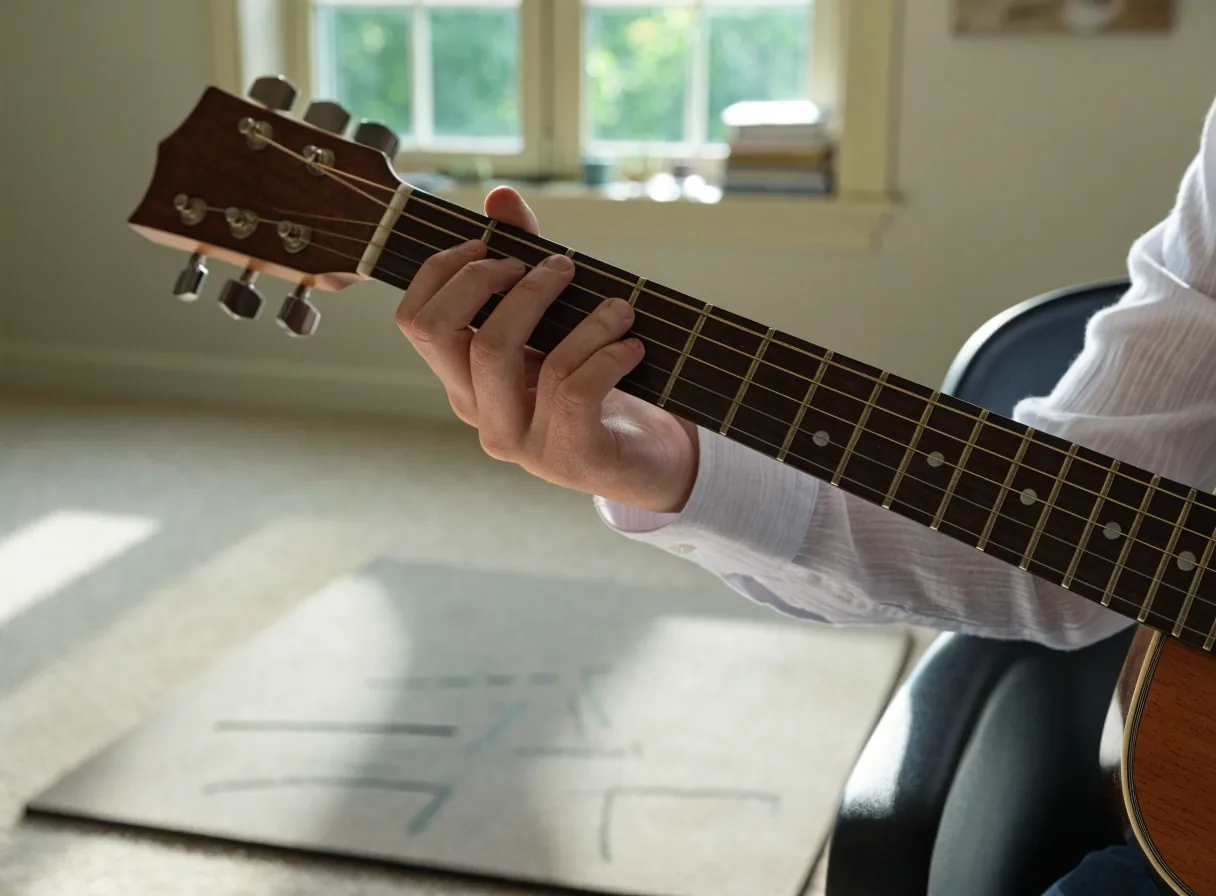
Online suits players with specific problems: a solo that will not come up to speed, an improvisation habit that has gone stale, or theory that never got connected to the fretboard. Sessions can be built around a recording you are preparing, a setlist, or an audition.
Because screen sharing is available, we can work through transcriptions and analysis on the same screen. Advanced students often find the format more focused than a weekly commute.
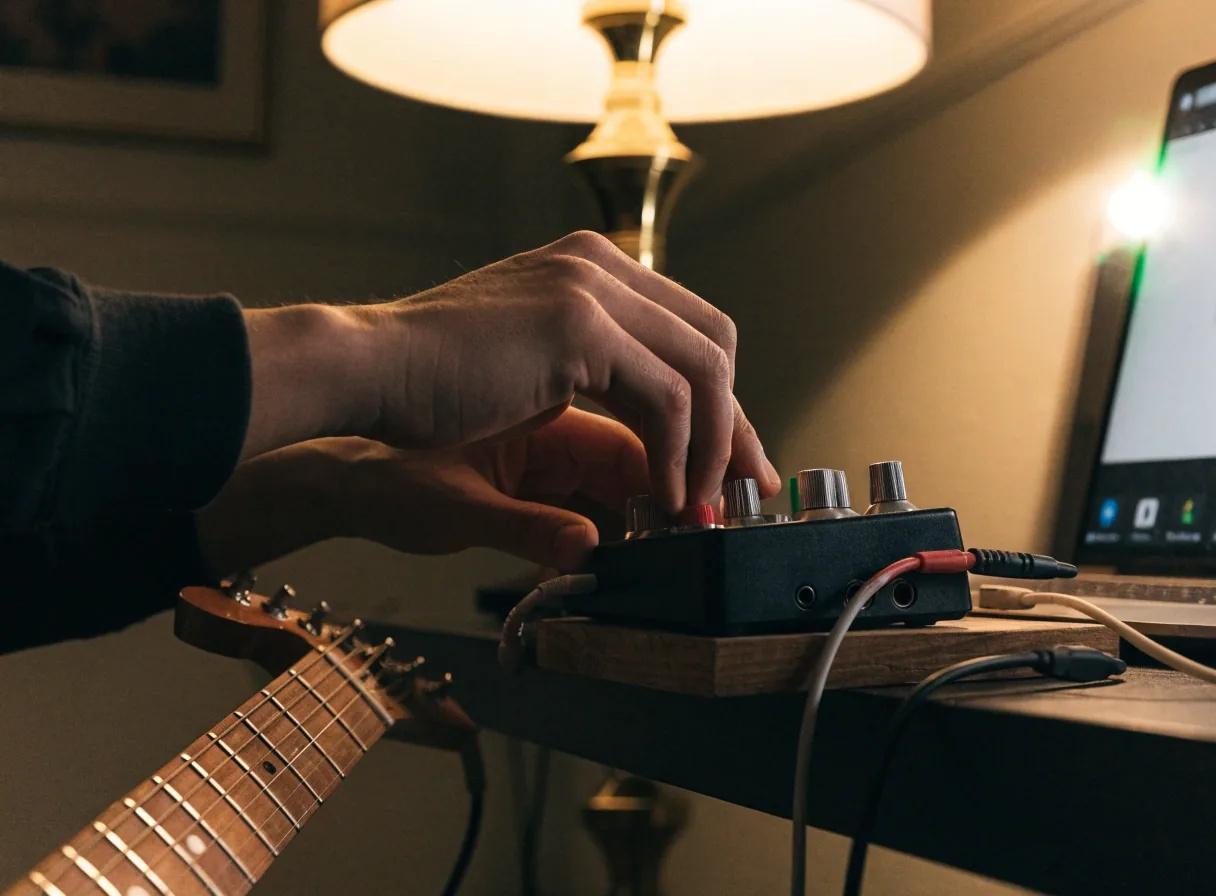
Slots get built around your shift, not a fixed timetable
Slots are arranged around your actual week rather than a fixed timetable. Evening and weekend times are the most requested and go first, so flexibility on the day usually gets a better match. If you travel for work, fortnightly sessions with more practice between them can work better than weekly ones you keep cancelling. Say honestly how often you can commit, and the plan will be built around that number. A rhythm you can keep beats an ambitious one you cannot.
Agree a slot and treat it as a test.
Best for steady progress and reliable practice.
For travel and shift-heavy weeks.
Most requested, so flexibility on the day helps.
Saturday daytime per studio hours.
A lighter rhythm you can actually hold.
Questions about online lessons
If you do not see your question, ask it in an enquiry and we will answer directly.
Can I start online as a complete beginner?
Yes. Early lessons focus on posture, a small set of chords, and playing in time. The teacher will ask you to angle the camera at your fretting hand more often than a face-to-face lesson would.
What happens if the connection drops mid-lesson?
We pick up where the lesson stopped. Short interruptions of a minute or two do not need to turn into a lost slot.
Do I need an audio interface or special software?
No. A phone, laptop or tablet with a camera and microphone is enough to begin, and a tuner app covers the rest.
How are times agreed, and how are fees discussed?
Times are matched from your enquiry. Fees depend on lesson length and frequency, so they are discussed directly before anything is booked, and there is no charge for the initial conversation.
How to get started online
Send an enquiry with your level, the styles you want, and roughly when you can play. We reply with honest guidance on whether online is the right format for your goal and what slots are open. If it fits, we suggest a first lesson. Fees are not listed on the site because they depend on length and frequency, and they are discussed directly before anything is booked. There is no charge for the initial conversation.
Monday to Friday, 9:00 AM – 6:00 PM
Saturday, 10:00 AM – 4:00 PM
27 Denmark Street
London WC2H 8NJ
United Kingdom