Fretwork Guitar Tuition Fretwork
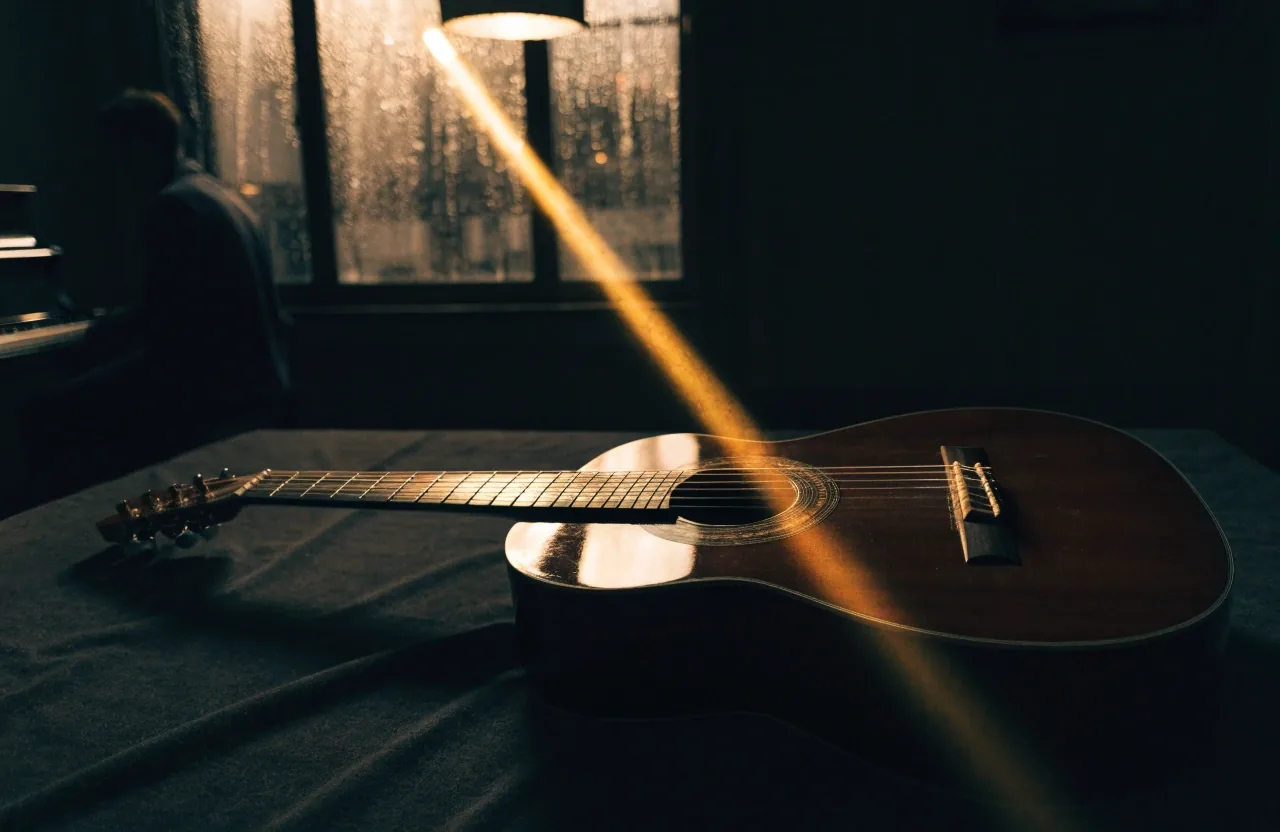
Classical guitar laid flat on dark cloth under low raking light

Guitar tuition · private lessons · studio

Formats and Styles for Every Kind of Guitarist

Acoustic, electric, classical or bass — in person in central London or live online. Read how the options differ in practice, then send an enquiry and we will get back to you directly.

What this page decides

You are not choosing a life. You are choosing a starting point.

This page is for the decision you are probably stuck on: what to learn, on which instrument, and in what format. Fretwork teaches private, one-to-one guitar lessons in acoustic, electric, classical, and bass, in person in central London or live online. Here is how the options differ in practice, so your enquiry is a useful one rather than a guess.

The four instruments, and who each one suits

Pick a lane to compare

Acoustic guitar lessons

The most commonly listed lesson type in the UK, and usually the best first instrument because no amplifier is required to hear yourself. Lessons cover open chords, strumming patterns, fingerstyle basics, and singing while playing, which is harder than it looks.

Songs drive the material, so the technique arrives attached to music you already like. If you own an acoustic and have never had a lesson, this is the obvious place to start.

Start here if: you already have a guitar at home and want to play songs you recognise.
Electric guitar lessons

Electric suits rock, blues, pop, and anything with a band attached. Lighter strings make bends and barre chords easier on beginner fingers, which is why some learners start here rather than on acoustic. Lessons cover riffs, power chords, lead playing, tone, and how to use an amplifier without drowning the room.

If your goal is playing with other people, this is often the shortest route there. An electric and a small practice amp are enough to begin.

Start here if: you want to be in a band, or bends and barre chords keep defeating you.

Classical guitar lessons

Classical guitar uses nylon strings and a formal right-hand technique, and it rewards patience more than speed. Lessons cover rest and free stroke, reading notation, tone production, and repertoire from the standard classical catalogue.

Players often arrive from another style wanting to fix their right hand or finally learn to read music properly. It is also the gentlest option on beginner fingertips. If you want structure and a graded path, this is the strongest fit.

Start here if: you want notation reading and a measured, formal technique from day one.

Bass guitar lessons

Bass is taught alongside guitar, and it is a different job: locking with a drummer, holding a groove, and understanding chord movement from underneath. Lessons cover fingerstyle and pick technique, timing, scales, and how bass lines are constructed rather than copied.

Many students are guitarists who got handed a bass in a band and want to do it properly. If groove and rhythm appeal more than solos, start here.

Start here if: rhythm and groove matter to you more than lead lines.

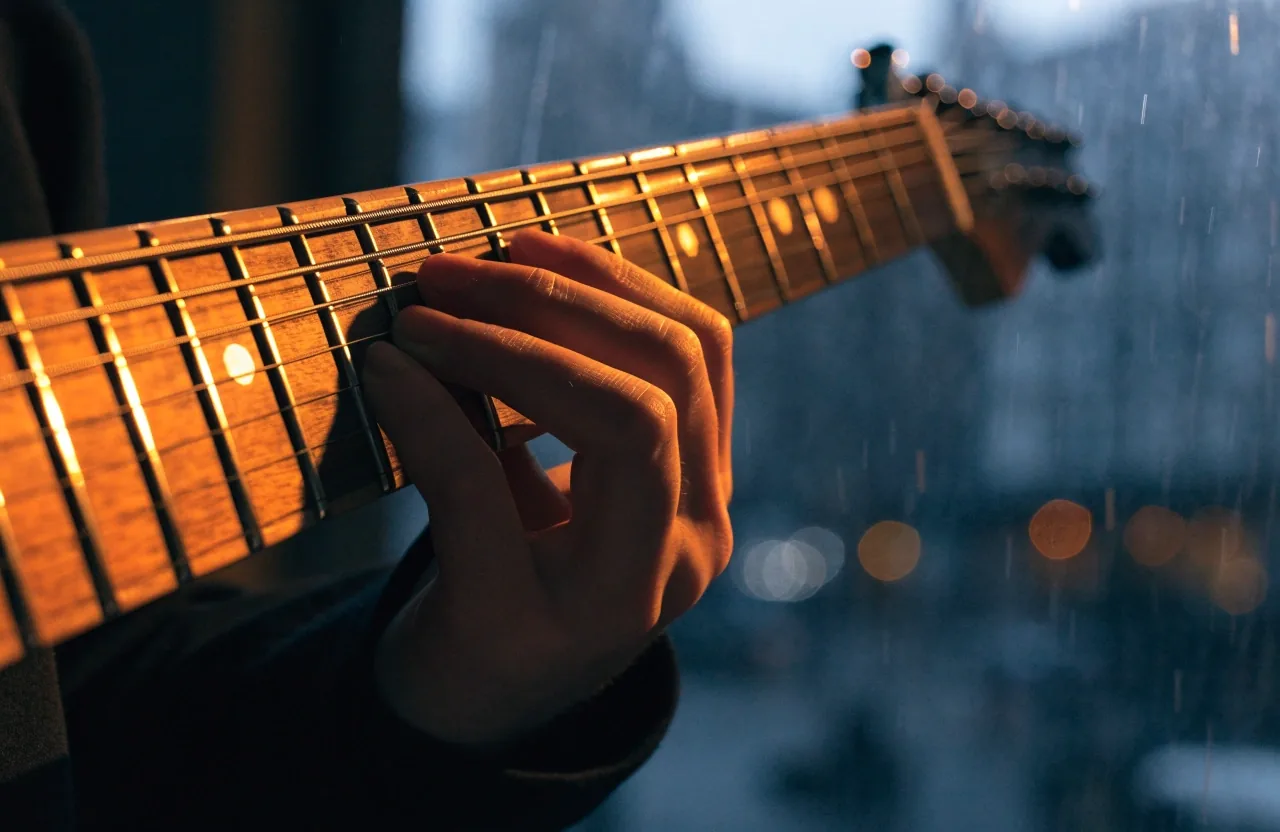
Close crop of a student's hand on a guitar fretboard catching amber light

In practice

Almost every enquiry we get is really asking one thing: will someone actually look at my hands and tell me what to fix. That is the whole shape of the lesson.

Private lessons or a class

One to one, because the problem is usually in one hand

The studio format

Private

Every lesson at the studio is one-to-one, which means the pace is set by you. If your strumming hand is the thing holding you back, twenty minutes can go on exactly that. It also means you cannot hide at the back, which is either the appeal or the fear depending on your temperament.

The alternative

Group class

In a class of ten, a teacher works through the room and moves on. You get the material and the company, and you get to be anonymous. Neither is wrong, but only one of them spends the hour on your strumming hand, which is why for most learners the faster feedback is worth the format.

Where the lessons happen

In person

Face-to-face lessons in London and Westminster let the teacher see and correct your hands directly, which is most valuable in the first few months when posture and grip are still forming. Several students also keep a weekly online slot going when travel time becomes the real obstacle.

Where the lessons happen

Live online

Live online lessons work for learners anywhere in the UK and suit people whose travel time is the real obstacle. The material is the same; only the delivery changes. Neither format requires special software beyond a video call, a guitar you can hear, and somewhere you can sit without being overheard.

Many students run both at once: an in-person session for technique and a shorter online slot to keep momentum through a busy month. If you are unsure which to start with, say so in your enquiry.

What a first term of one-to-one lessons actually covers

Reviewed and rewritten, never left to drift

First session

Diagnostic

What you can already do, what you want to play, how often you can practise.

Term plan

Written

Specific targets for the term, agreed together rather than handed down.

Technique

Hands first

One clean chord change at tempo, or a piece played start to finish.

Repertoire

Songs you like

Technique arrives attached to music you already want to play.

Review

Rewritten

You always know what you are working toward and why an exercise is on the page.

Next term

Or switch lane

Try acoustic first, add electric later. The instrument is not a ceiling.

How a plan gets written

The first session is diagnostic, not a performance

Nobody auditions. The first lesson exists to find out what you can already do, what you want to play, and how much you can realistically practise in a normal week. That last part matters more than most learners expect — a plan built around twenty minutes a day is worth more than one built around an hour you will not find.

From there a term-length lesson plan is written with specific targets: a clean chord change at tempo, a scale played evenly in both directions, or a full piece performed start to finish. Plans are reviewed and rewritten as you go rather than left to drift, so you will always know what you are working toward and why a particular exercise is on the page.

What you bring
Your own guitar if you have one. If you do not, say so in the enquiry and we will advise on what to borrow or buy before your first lesson.
What you do not need
No previous experience, no ability to read music, and no equipment beyond something you can hear yourself through.

Choosing when you are not sure

If you are torn between acoustic, electric, and classical, do not treat it as a permanent decision. Many students try acoustic first and add electric later, or start classical to build reading and keep it alongside rock. The instrument you pick mostly decides the repertoire and the string feel, not your ceiling.

Mention both options in your enquiry and we will suggest which to begin with. You can always change, and switching instruments halfway through a term is a normal thing to do here, not an admission that the first choice was wrong.

Ask which style suits me
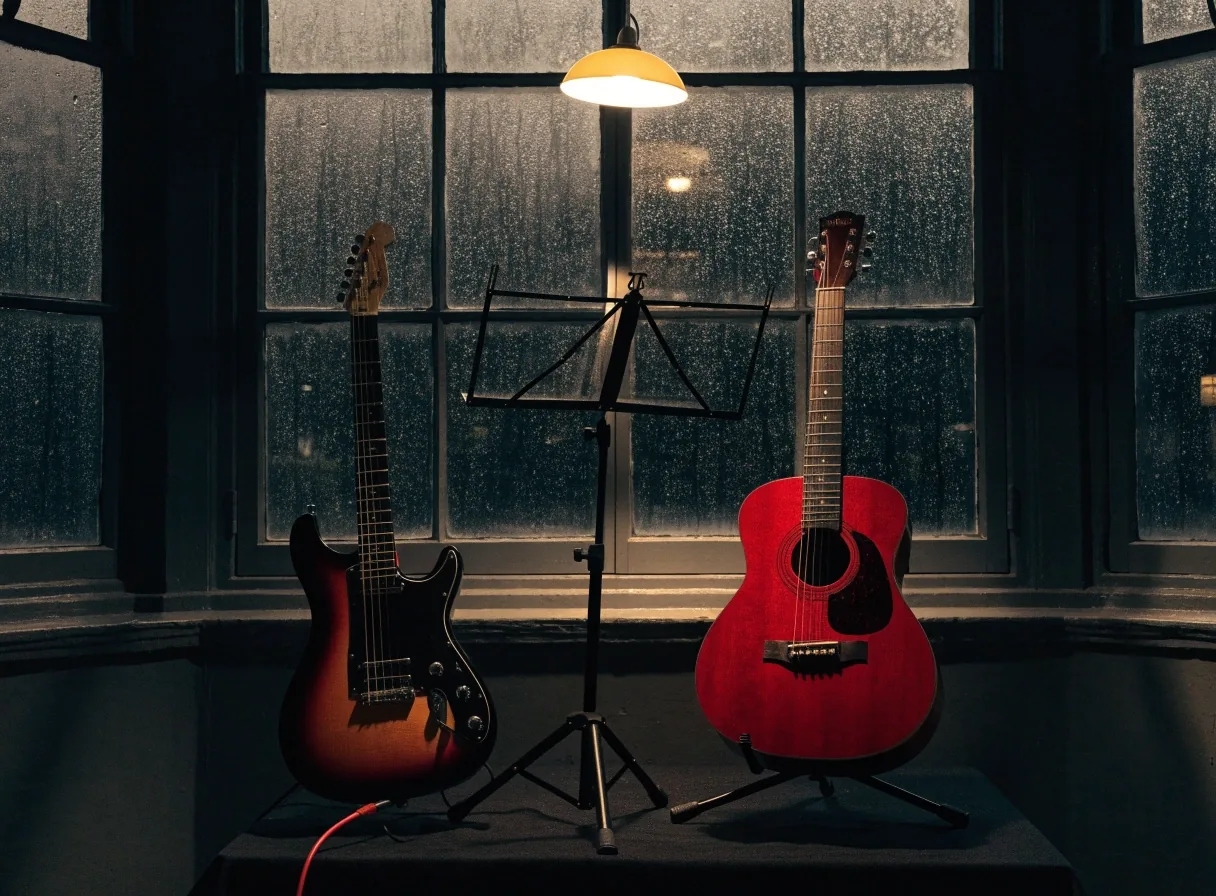
Small tuition room at night with guitars on stands under a single lamp

Two instruments in the room, one teacher watching your hands.

Before you enquire

Questions that come up most often

If your question is not here, the full FAQ page covers scheduling, equipment and how a first lesson runs.

Can I learn more than one style at the same time?

Yes. Plenty of students keep a classical thread going for reading and technique while spending most of the lesson on electric or acoustic repertoire. It is a question of how the term plan is divided, not whether it is allowed.

Do I need my own guitar to start?

It helps to have something to practise on between lessons, and borrowing one for the first few weeks is a reasonable way to begin. Explain your situation in the enquiry and we will tell you what makes sense for the style you have picked, whether that is a nylon-string classical, a steel-string acoustic, an electric with a small amp, or a bass.

Is a beginner-friendly lesson different from an advanced one?

The shape is the same — diagnose, plan, review — but the content is completely different. Beginners spend time on fretboard geography, chord shapes, rhythm and getting a clean sound. Intermediate and advanced students tend to arrive with specific problems: a right hand that will not relax, timing that drifts under pressure, improvisation that keeps landing on the same notes. Where a beginner needs breadth, an advanced player usually needs precision on one thing.

Can I switch from online to in person later?

Yes, and students move between the two as their week changes. The lesson plan carries across, so you keep your place in the material. Face-to-face teaching happens in central London and Westminster; live online lessons reach learners anywhere in the UK.

Tell us the instrument and the format. We will take it from there.

Send an enquiry with what you want to play, whether you would rather meet in central London or study live online, and any playing you have already done. The studio reads every enquiry and replies directly to arrange tuition — no waiting on a booking system.

Lessons run Monday to Friday, 9:00 AM – 6:00 PM, and Saturday, 10:00 AM – 4:00 PM. You can also call the studio on +44 20 7237 8067 or email [email protected] if that is easier.