

United Kingdom
Guitar tuition
Lessons by level
Online & in person
Enquiry only
Guitar Lessons in London and Live Online
One-to-one acoustic, electric, classical and bass tuition from a small UK studio — face-to-face in central London, live online anywhere with a stable connection.
Formats and styles
What you can learn here
Most people start with one instrument and one song. The plan grows from there.
Acoustic guitar
Open chords to fingerstyle
The most common starting point, and the easiest first instrument because you can play it without an amplifier. We begin with clean chord changes, steady timing, and the songs you already listen to.
Electric guitar
Rock, blues, pop
Suited to players drawn to riffs and solos, and often gentler on the fingers at the start because the strings are lighter. Good for work on tone, muting, and playing in a band.
Classical guitar
Reading and tone
Nylon strings and a different right-hand technique. It rewards players who want to read music properly and study how a piece sounds rather than only how it is fingered.
Bass guitar
Groove and timing
A different job in the band: holding the low end and keeping time with the drummer. Lessons focus on groove, note length, and knowing when not to play.
Tell us the music you listen to and the lesson plan is built around it, rather than around a fixed syllabus that assumes everyone wants the same pieces.
Private lessons
One-to-one lessons, not a class
Every lesson is private, so the pace is yours. A forty-minute slot with a beginner looks nothing like the same slot with an intermediate player working on improvisation. There is no queue of other students and no pressure to keep up with a room.
If you are returning after years away
Adult learners coming back to the instrument often care more about the format than the content. Say in the enquiry where you stopped, and the first lessons pick up there instead of starting at chapter one.
If you have stalled on your own
Barre chords, fingerstyle patterns, reading notation, playing with other people — name the thing that is blocking you. One teacher hearing it once is usually more use than another round of videos.
Two ways to learn
Face-to-face in London and Westminster, or live online across the UK
In the room
In-person lessons run in central London, including Westminster, and suit players who want a teacher in the room to correct hand position, posture, and timing while it happens.
- Best for posture, hand shape, and anything physical that is hard to describe out loud.
- A regular slot on the same evening each week is easier to protect than a floating one.
- Central-London availability moves quickly, so say which days you can travel and which district you come from. If your area does not work, we will say so honestly.
On a video call
Online lessons are live, one-to-one, and run the same way as an in-person session — just through a standard video call. They open the studio to learners in Manchester, Edinburgh, Brighton, and anywhere else with a stable connection.
- You need a guitar, a device with a camera and microphone, and enough space to sit and play.
- No special software beyond the call itself, and no setup to learn before the first lesson.
- Several students mix online and in-person lessons month by month, and the plan carries across both.
Pick your first instrument
Choosing between acoustic, electric, and classical
There is no wrong answer, and you are not signing up for life. Pick the instrument that matches the songs you want to play this month, and change later if the music takes you elsewhere.

Acoustic first, most of the time
Acoustic guitar is the most commonly listed lesson type in UK tutor search, and usually the easiest first instrument because it needs no amplifier and no cables. Most beginners start here and add a second instrument once they know what they enjoy.
When electric is the better start
If the music you actually listen to is rock, blues, or pop, an electric makes more sense from week one. Lighter strings are often kinder on beginner fingers, though you will need an amplifier and a cable to practise at home.
When classical earns its place
Nylon strings, a wider neck, and a right-hand technique that asks for control rather than volume. It suits players who want to read music and study how a phrase sounds, and it is a good second instrument for anyone already playing steel strings.
Still deciding? Say so in the enquiry. We would rather advise you before you spend money on the wrong instrument than after.
Who the studio teaches
Adults and younger learners
Adults and children are taught differently, mostly in how the lesson is paced and how much theory is explained rather than demonstrated. Both are welcome, and both get the same one-to-one attention. Age is a less useful signal than how much practice time you realistically have.
Younger players
Shorter, more frequent sessions with a clear goal for the week work best. Songs they already know keep the motivation up, and short practice at home beats one long sitting.
Adult learners
Adults usually want the reasoning behind a technique, and they move faster once they understand why a shape works. Knowing that lets us explain instead of simply repeating a demonstration.
A first term, week by week
What a first term tends to look like
The shape of a term, not a promise. Some weeks a chord just clicks; other weeks nothing does.
Weeks 1–2
Single notes, hand position, and hearing when a note rings true.
Weeks 3–4
A small set of shapes and the changes between them, slowly at first.
Weeks 5–6
A metronome or a simple backing track, so the songs hold together.
Weeks 7–8
Something you can play end to end, even with a few rough edges.
Weeks 9–10
Playing along with another part, which is where timing gets honest.
Weeks 11–12
Where you have got to, and what the next term should actually chase.
From there the plan depends on your goal: songs you can play with friends, a first solo, or reading music properly. The lesson plan is written for the term and then reviewed, so it stays useful instead of turning into a checklist.
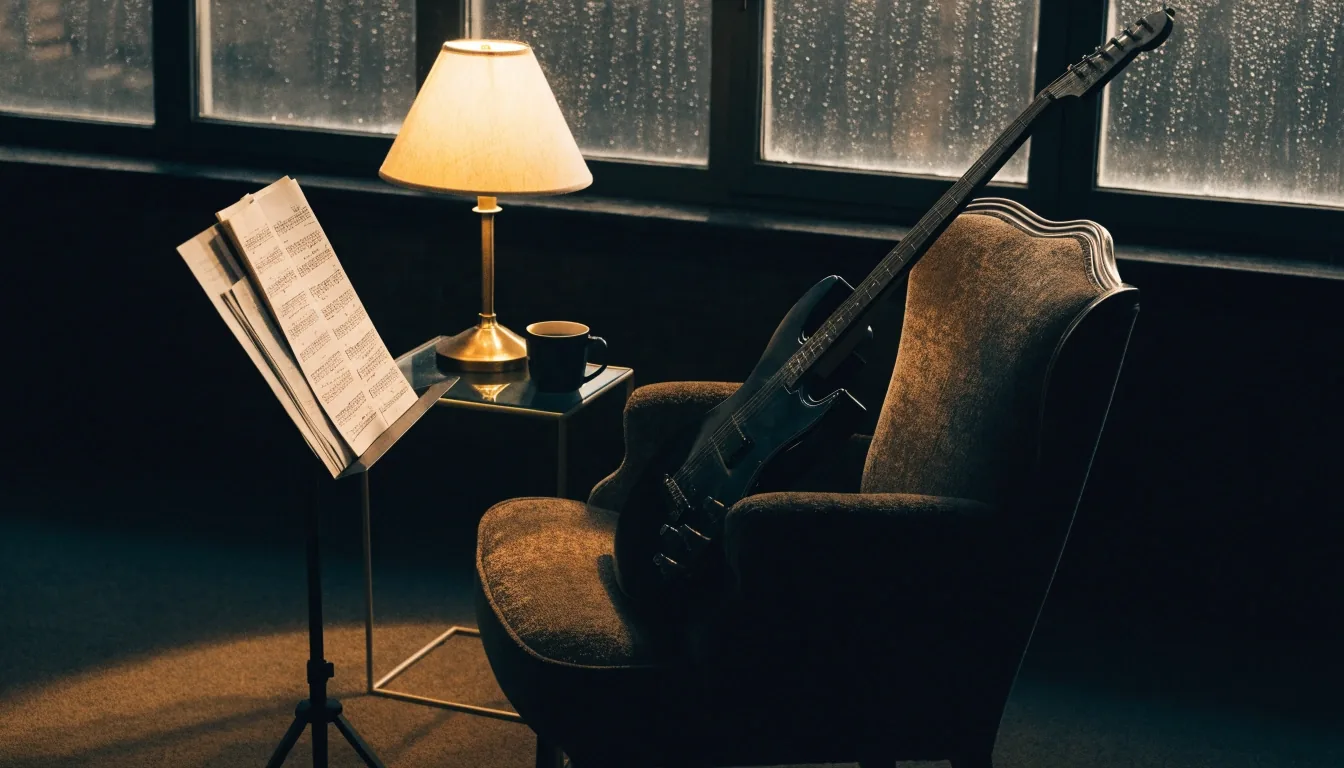
Evenings, weekends, and everything else
Guitar tuition that fits around work
Most enquiries come from people with full weeks. Evening and weekend slots are the most requested and they fill first. If you can be flexible about the day, you will usually get a better match with the teacher who suits your style.
Weekly or fortnightly
Weekly lessons suit most learners. Some prefer fortnightly sessions with more practice in between, especially during heavy work travel. Say what your month actually looks like and we will suggest a rhythm that survives it.
Lessons by level, not by age
Whether you have never held a guitar or have played for years and want to move past a plateau, the format is the same private lesson, paced to what you can actually fit in between sessions.
One teacher, one plan
How the studio differs from a marketplace
Marketplaces are useful for comparing many tutors quickly across cities like Birmingham, Liverpool, or Manchester. A studio works differently. You get continuity, a single teacher who knows your history, and a lesson plan that builds across months rather than restarting each time.
That matters most for intermediate and advanced students who need someone tracking their development over a term. If you want to sample several teachers, a platform is a reasonable route. If you want to stop searching every few weeks, this is the alternative.
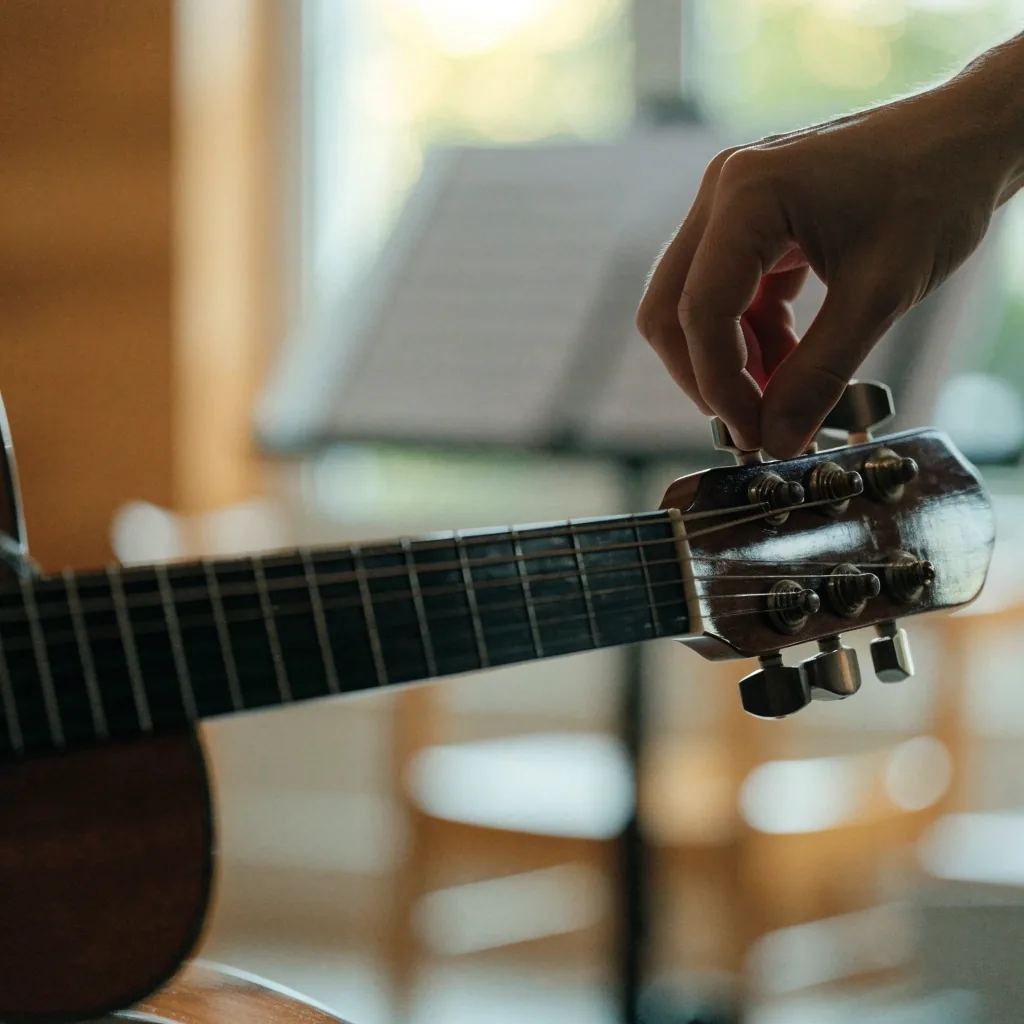
Continuity is the point. A teacher who remembers what you struggled with last month teaches differently this month.
Where the studio sits in the UK picture
UK guitar tuition is a local, search-driven market with a large concentration of listings in London and Westminster and strong regional demand in Manchester, Edinburgh, and Brighton. Nationwide platforms cover those cities, and central-London institutes teach a broad range of styles.
Fretwork is deliberately smaller than that. It teaches private, one-to-one lessons in person and online, and it keeps the roster limited so each learner gets proper attention. That is the whole model, and it is why the lesson plan can be rewritten when your goals change.
Enquiries
What happens after you enquire
You send a short enquiry with your level, the styles you want, and roughly when you can play. We read it and reply with honest guidance on format and availability. If it looks like a good fit, we suggest a first slot. If it does not, we say so and point you somewhere more suitable.
There is no obligation to book and no charge for the initial conversation. Lesson fees are discussed directly once we understand what you need, so nothing is quoted blind on this site.
Fretwork Guitar Tuition
- 27 Denmark Street, London WC2H 8NJ, United Kingdom
- [email protected]
- +44 20 7237 8067
- Monday to Friday, 9:00 AM – 6:00 PM · Saturday, 10:00 AM – 4:00 PM
Getting ready
Preparing before your first lesson
Nothing formal is required. If you have a guitar, bring it; if you are still choosing, say so and we can advise before you spend money on the wrong instrument. Have one or two songs in mind that you would love to play, because that shapes the plan immediately.
Tune up if you can. Beyond that, turn up curious and with realistic expectations about how much practice you can fit in around work, family, or study. That is genuinely all that is needed to start.
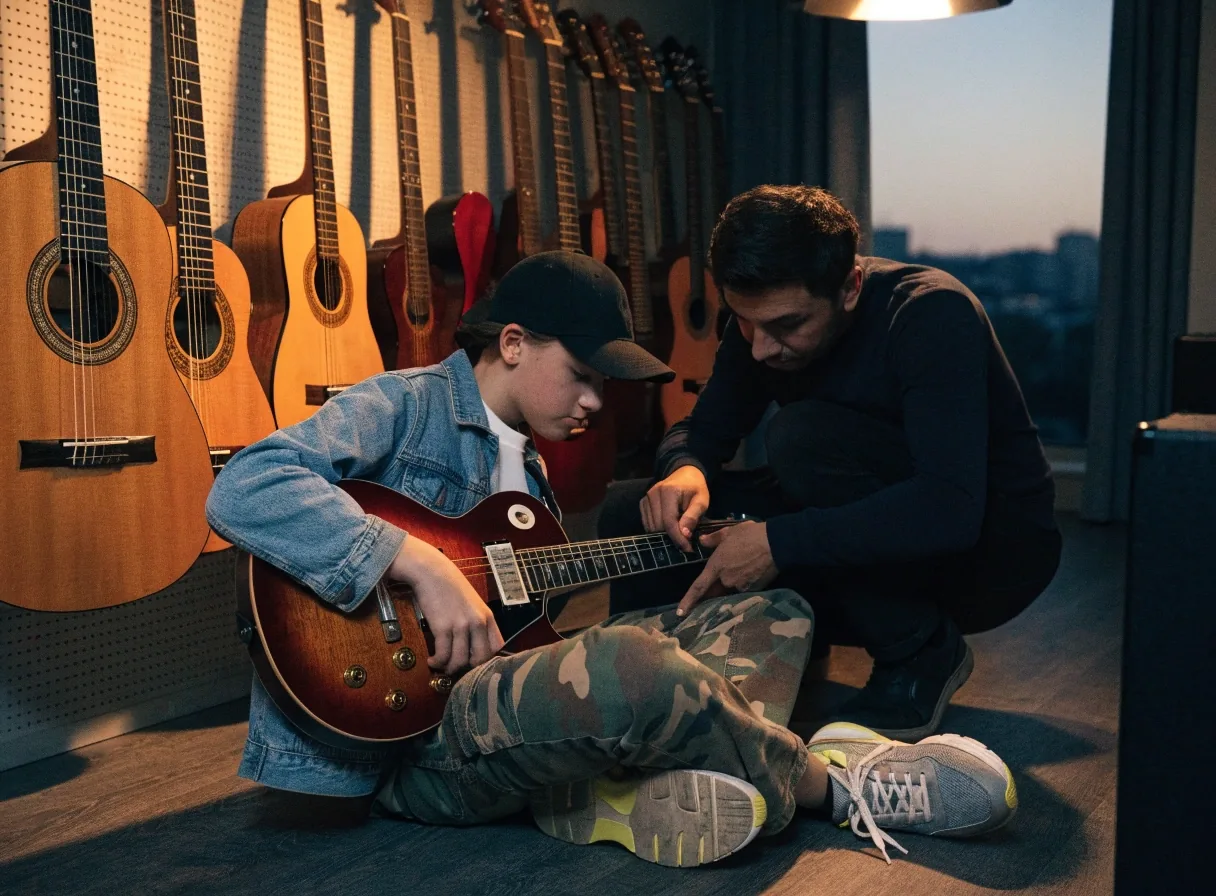
The first lesson starts with what you already listen to. That is the only syllabus worth writing.
Common questions
Questions people ask before starting
If your question is not here, the enquiry form is the fastest route to a straight answer.
Read all questions
How long are lessons?
Most lessons run 30, 45, or 60 minutes, matching the common formats offered across UK tutor platforms. The right length depends on your level and concentration, and we will suggest one after reading your enquiry.
Do I need my own guitar before enquiring?
It helps, but it is not required. If you are still deciding between acoustic, electric, and classical, mention that in the form and we will guide you before you buy anything.
Can I switch between online and in-person?
Yes. Several learners mix live online lessons with face-to-face sessions in London depending on their month, and the plan can continue across both formats.
Do you teach complete beginners?
Yes. Beginner-friendly tuition is a core part of the studio, and first lessons are built around clean chords, steady timing, and songs you actually want to play.
Is there a price list?
No. Fees are discussed directly once we understand your format, level, and frequency, so nothing quoted here would be accurate for your situation.
How soon will I hear back?
We reply to enquiries as quickly as we can during the working week. Include your availability and the styles you want, and the reply will be more useful.
Next step
Start with a short message, not a booking
Fretwork teaches one-to-one guitar lessons in central London and live online, for beginners through to players working on their own material. Send the enquiry above, or read more about the studio, the styles on offer, and how a first term is planned.